
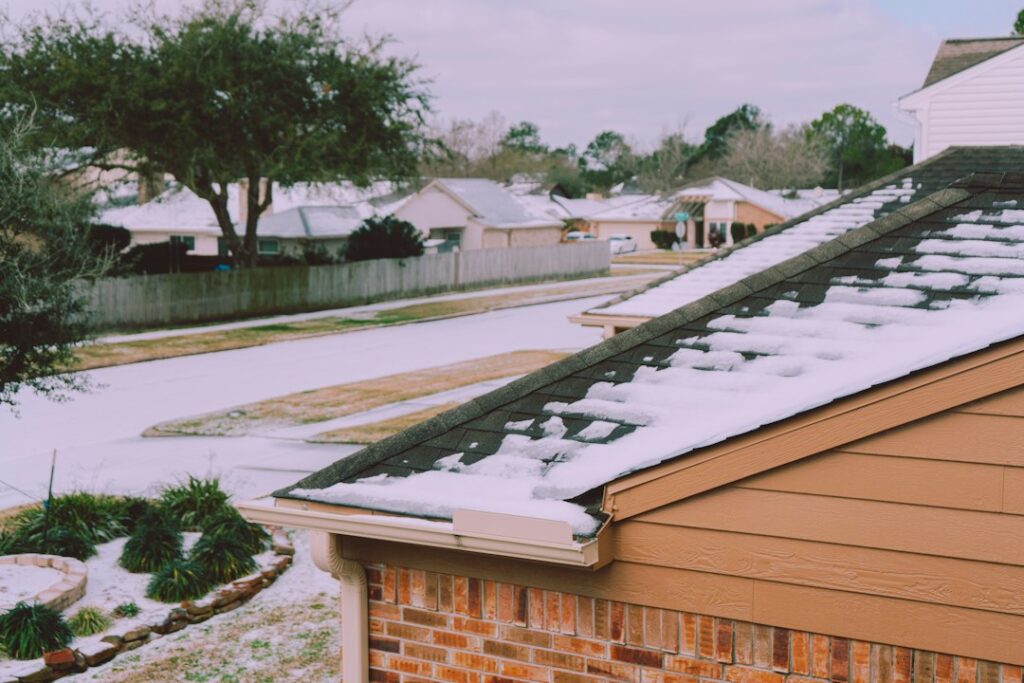
Which roof shape is better for a home?
Neither flat roofs nor sloped roofs is automatically right for every property. The better choice depends on the building’s design, how water and snow will drain, available attic space, maintenance expectations, and the condition of the supporting structure.
For many traditional houses in Medina, a sloped roof is the more familiar arrangement because it sheds rain and snow naturally. Flat or low-slope roofs can still perform well, especially on additions, garages, porches, commercial-style buildings, and homes designed around modern roof systems. Their success depends heavily on drainage details and regular inspection.
What is the difference between a flat roof and a sloped roof?
A flat roof is not completely level. It has a slight pitch that directs water toward drains, scuppers, gutters, or internal drainage points. Low-slope roofs are usually covered with materials designed for limited water flow, such as membrane systems or specialized rolled roofing.
A sloped roof has a more noticeable angle. Water generally moves toward the eaves and into gutters or away from the building. Sloped roofs may use asphalt shingles, metal panels, wood products, slate, or other coverings suited to the roof’s pitch.
The distinction matters because roofing materials are not interchangeable. A covering designed for a steep roof may not be appropriate on a low-slope surface, where water drains more slowly and seams face greater exposure.
Why are sloped roofs common in this area?
Sloped roofs provide a practical response to seasonal rain, freezing conditions, and snow. Water has a shorter path to the roof edge, and snow is more likely to slide or shed gradually instead of remaining evenly distributed across the entire surface.
That does not mean every sloped roof clears itself of snow. Snow can collect in valleys, behind roof features, near walls, or where one roof section meets another. Ice dams can also form when heat escapes into the attic and melts snow near the warmer upper portion of the roof. The water may then refreeze near colder eaves.
A well-designed sloped roof still requires:
- Proper attic ventilation and insulation
- Secure flashing around chimneys, walls, and roof penetrations
- Clear, correctly sized gutters and downspouts
- Attention to valleys and areas where roof sections intersect
- Safe inspection after major storms
The angle of the roof helps, but construction quality and maintenance determine much of the actual performance.
What are the advantages of a flat or low-slope roof?
Flat roofs can make good use of a building’s shape. They may provide a clean appearance, allow mechanical equipment or solar installations to be arranged conveniently, and create a roof profile that suits additions or one-story structures.
They can also reduce the amount of interior attic volume and may simplify certain modern designs. On a low-slope roof, large membrane sheets can cover broad areas with fewer visible seams than some traditional roofing materials.
A flat roof may be especially practical where:
- The building has a modern or low-profile design
- A rear addition connects to an older house
- The roof must accommodate equipment or usable outdoor space
- Interior ceiling height and roof framing are designed for the system
- Drainage can be planned with dependable outlets and overflow protection
The main limitation is that flat roofs rely on designed drainage rather than gravity alone. A blocked drain, damaged membrane, settled deck, or poorly sloped section can allow water to remain on the roof.
What are the disadvantages of flat roofs?
The largest concern is ponding water. Small amounts of temporary moisture may occur after rain, but water that remains for extended periods can place stress on the roof covering, seams, insulation, and structural deck.
Freeze-thaw conditions add another challenge. Water can enter small openings, freeze, expand, and enlarge the damage. Repeated cycles may affect flashing, membrane seams, drains, and areas where the roof meets a wall.
Flat roofs also require careful attention to:
- Drain screens and outlets
- Scuppers and emergency overflow paths
- Membrane seams and edge details
- Damage from branches, tools, or foot traffic
- Leaves and debris that hold moisture
- Areas where snow drifts against walls or higher roof sections
A low-slope roof is not necessarily fragile, but it offers less tolerance for neglected drainage than a roof with a strong pitch.
Which roof handles snow better?
A sloped roof generally moves snow and water away more naturally, but the best choice depends on structural design rather than roof shape alone. New and substantially altered roofs must be designed for the applicable snow loads and other requirements under New York’s building code.
Flat roofs carry snow over a broader, more level surface. That can make drifting and uneven accumulation important concerns, particularly near taller sections, parapet walls, roof projections, and adjoining structures. Snow should not be removed casually with sharp tools or by walking across an unfamiliar roof surface.
A sloped roof can also experience uneven loading. Valleys, dormers, lower roof sections, and sheltered areas may collect more snow than open planes. Ice buildup at eaves can obstruct drainage and contribute to leaks.
The practical question is not simply whether the roof is flat or sloped. It is whether the structure, drainage, insulation, ventilation, flashing, and covering were designed for the conditions the building actually experiences.
Which roof lasts longer?

Roof life depends on material, installation, ventilation, drainage, exposure, maintenance, and the condition of the roof deck. A carefully maintained low-slope membrane can outlast a neglected shingle roof, while a properly built sloped roof can provide dependable service for many years.
Sloped roofs often make leak locations easier to understand because water generally travels downhill toward the visible problem. Flat roofs can be more deceptive. A leak may appear far from the damaged seam, drain, flashing, or penetration where water entered.
Age alone does not determine whether replacement is necessary. Warning signs include:
- Repeated leaks in the same area
- Soft or sagging roof decking
- Cracked, lifted, or missing coverings
- Damaged flashing
- Standing water that remains after dry weather
- Interior stains, peeling paint, or damp insulation
- Granules collecting heavily in gutters
- Ice-related damage at edges or roof joints
Is one roof cheaper to maintain?
Initial cost and long-term maintenance are separate questions. A roof with a simple shape may require fewer materials and less complicated flashing. However, unusual roof geometry, limited access, drainage modifications, or structural repairs can change the total cost significantly.
Flat roofs often need more deliberate inspections because drains, seams, and edge details are central to performance. Sloped roofs may require attention to shingles, valleys, gutters, flashing, and attic conditions.
Maintenance should be based on the roof system rather than a general assumption that one shape is inexpensive. Keeping drainage paths clear, checking after severe weather, and addressing small defects before water reaches the structure can reduce avoidable damage.
What should a Medina homeowner consider before choosing?
Start with the building itself. A replacement roof should work with the existing walls, framing, attic, insulation, ventilation, and drainage layout. Changing from a sloped roof to a flat roof, or the reverse, may involve structural and code considerations beyond the roof covering.
For a property in Medina, seasonal weather makes water management especially important. Consider:
- How snow will accumulate and melt
- Where downspouts will discharge water
- Whether nearby trees can drop branches or debris
- How ice dams may affect the eaves
- Whether the attic is properly insulated and ventilated
- How easily the roof can be inspected safely
- Whether additions or porches create lower roof sections
- Whether the current structure can support a different roof design
A sloped roof is often the straightforward choice for a conventional house, while a flat or low-slope roof can be appropriate when the architecture and drainage system are designed for it. The most reliable decision is the one that matches the structure, climate demands, and maintenance capacity rather than following appearance or short-term cost alone.
