
Why does roof drainage matter?
Effective roof drainage moves rain, melting snow, and ice away from the roof, walls, foundation, walkways, and neighboring property. A roof can be in good condition and still cause serious water damage if its gutters, downspouts, valleys, or ground-level discharge points are poorly designed or blocked.
In Medina, NY, drainage systems must handle repeated freeze-thaw cycles, heavy rain, wet snow, and spring snowmelt. Water that drains correctly during a mild rain may overflow when leaves, ice, or compacted snow reduce the system’s capacity.
Roof drainage is not just a gutter issue. It is a complete path that begins at the roof surface and ends at a safe discharge area.
What should a complete roof drainage system include?
A properly functioning system usually includes four connected parts:
- Sloped roof surfaces that direct water toward edges, valleys, drains, or scuppers
- Gutters or internal drains sized for the roof area and expected rainfall
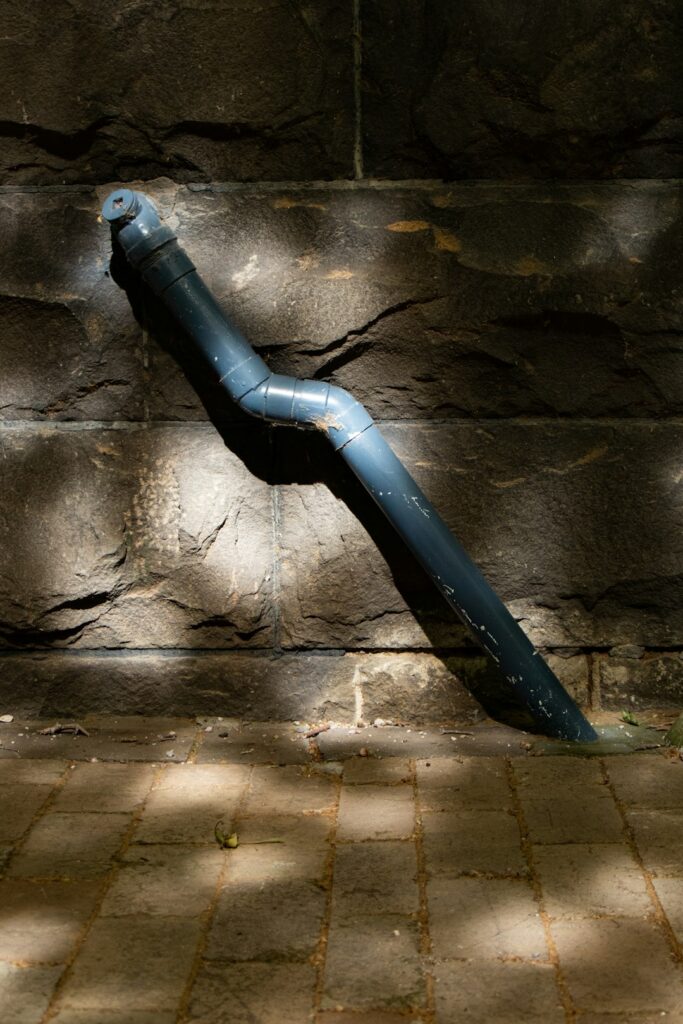
- Downspouts that carry water vertically without leaking at joints
- A ground-level outlet that releases water away from the structure
Each part affects the others. A large gutter cannot compensate for a downspout that is too small or clogged. A well-positioned downspout can still cause problems if its lower end discharges directly beside the foundation.
Roof valleys deserve special attention because they collect water from two roof planes. Valley flashing, shingles, metal panels, and nearby gutters should be checked for leaves, sediment, ice damage, and signs of concentrated runoff.
How should gutters be installed and maintained?
Gutters should have a continuous, slight slope toward their outlets. A commonly used minimum slope is about one-quarter inch for every 10 feet, although the required arrangement depends on gutter length, size, outlet placement, and the building design.
Gutters should also be securely fastened. Sagging sections create low spots where water and debris collect. Those areas may freeze in winter, adding weight and increasing the chance of separation from the fascia.
Good maintenance includes:
- Clearing leaves and roof grit at least in spring and fall
- Checking for standing water after a rain
- Inspecting seams, end caps, corners, and outlet openings
- Looking for loose hangers or sections pulling away from the roof edge
- Removing packed snow or ice only with methods that do not damage the roof or gutter
- Confirming that water flows freely through each downspout
A gutter guard may reduce the amount of debris entering a gutter, but it does not eliminate maintenance. Small particles, roof granules, pine needles, and ice can still restrict flow.
Where should downspouts discharge?
Downspouts should direct water far enough away from the foundation to prevent repeated saturation. The correct distance depends on soil conditions, grading, basement construction, nearby pavement, and whether the property has a collection or drainage system.
The discharge point should not create a new problem by sending water:
- Against foundation walls
- Onto basement stairwells or window wells
- Across walkways where it can freeze
- Onto a neighboring property
- Toward a driveway or low spot that drains back toward the house
- Directly onto eroding soil or exposed foundation footings
Downspout extensions, splash blocks, underground piping, or approved drainage features may be appropriate, but each must remain clear and properly pitched. Buried lines should be checked for crushing, blockage, root intrusion, and frozen sections.
A downspout connected to an interior drain or sewer system should not be altered casually. Drainage arrangements vary by property, and local requirements may apply. The goal is to keep roof water from overwhelming systems that were not designed to handle it.
What is the best approach for winter roof drainage?
Winter drainage depends on preventing water from becoming trapped, backing up, or refreezing in harmful locations. Ice dams can form when heat escapes into the attic, warms the underside of the roof, and causes snow to melt above a colder roof edge. The meltwater may refreeze near the eaves and force water beneath roof coverings.
Good winter practices include:
- Keeping attic insulation and air sealing in sound condition
- Maintaining clear gutters and downspouts before snow arrives
- Checking that downspout outlets are not buried in snow or blocked by ice
- Avoiding the use of sharp tools, salt, or aggressive methods that can damage roofing materials
- Watching for recurring ice buildup in the same roof areas
- Removing excessive snow only when necessary and with methods that protect the roof surface

Ice dams are not usually solved by removing ice alone. Recurring problems often point to a combination of heat loss, air leakage, ventilation, roof geometry, and drainage limitations.
How do roof design and house age affect drainage?
Older homes may have roof additions, enclosed porches, intersecting slopes, shallow pitches, or uneven eaves that complicate water movement. A later addition may direct runoff toward a wall or roof section that was not designed to receive it.
Low-slope sections require especially careful drainage because water moves more slowly and may remain on the roof longer. Ponding water can expose seams, flashing, and membrane materials to prolonged stress. Even a small depression may become significant when filled with rain or melting snow.
Dormers, chimneys, skylights, and wall-to-roof intersections also need properly designed flashing. Water stains near these features do not always indicate a failed roof covering; they may result from blocked drainage, poorly directed runoff, or deteriorated flashing.
During roof replacement or remodeling, drainage should be reviewed as part of the overall design rather than treated as a separate finishing detail.
How can homeowners identify drainage problems early?
The most useful inspection is performed during or shortly after rainfall, followed by another check after freezing weather. Look for:
- Water spilling over the front or back of gutters
- Dark staining or algae-like growth beneath roof edges
- Eroded soil below downspouts
- Wet basement walls or damp crawl-space areas
- Peeling paint, softened trim, or stained siding
- Shingle edges that appear lifted near valleys or eaves
- Ice buildup concentrated at gutters and roof edges
- Water marks on ceilings near exterior walls or roof penetrations
A small drip does not always mean a minor problem. Repeated wetting can damage wood, insulation, masonry, and interior finishes over time.
Safe ground-level observation is usually enough for routine checks. Roof access becomes hazardous during wet, icy, or snowy conditions, and damaged roofing materials can worsen when walked on. Safety and applicable building requirements take priority over a closer visual inspection.
What is a common misconception about gutters?
A common misconception is that gutters should drain as quickly as possible into any available low spot. Fast discharge is not the same as controlled drainage. Sending a concentrated stream beside the foundation can be more damaging than allowing a properly distributed flow across a stable, well-graded area.
Another misconception is that roof drainage can be evaluated only by looking at the roof covering. Shingles or metal panels may appear intact while the drainage path is blocked, undersized, disconnected, or discharging in the wrong location.
The most reliable approach is to follow the water from the highest roof surface all the way to its final outlet. If any section of that path is interrupted, the building may still be exposed to moisture even when the roof itself appears sound.
